
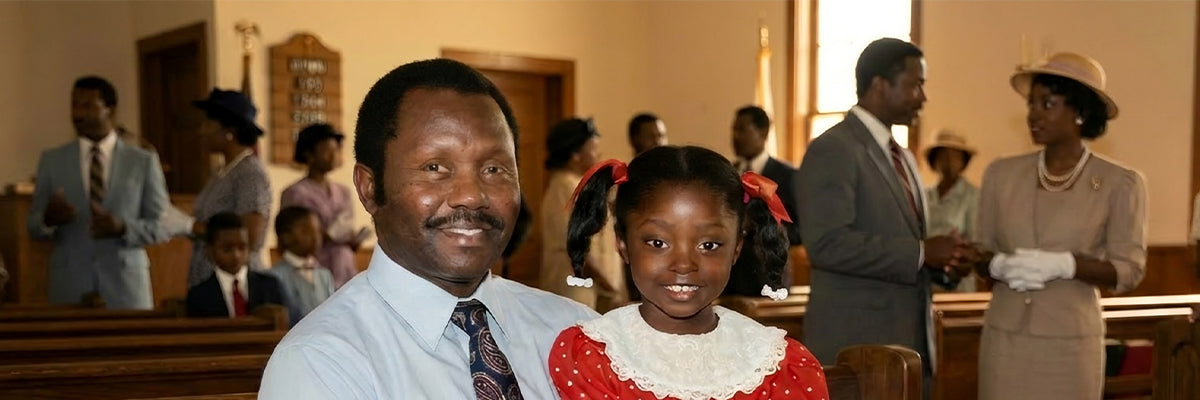
Un hombre de pocas palabras
Duelo alegre
El Día del Padre pasado, me senté a escribir sobre José de Nazaret —el padre terrenal de Jesucristo— y el poder silencioso e inquebrantable de su presencia. No tenía idea de que para esta temporada del Día del Padre, estaría escribiendo desde un lugar completamente diferente: un lugar de duelo alegre.
Mi papá, Taylor Cornwell —más conocido por todos los que lo querían como T.C.— falleció el pasado agosto. Así que, este es mi primer Día del Padre sin él aquí. Digo duelo alegre porque entiendo la bendición. Sé lo que significa haber sido amada y protegida por un padre. Y lloro porque estoy triste y lo extraño profundamente.
Ambas cosas son ciertas al mismo tiempo, y estoy aprendiendo a sostenerlas ambas.
Mi alias, Cornwell's Girl, no es solo una marca; es identidad. Está arraigado en quién era mi papá y, por extensión, en quién soy yo. Llevo su nombre porque su presencia me moldeó. Con este escrito, derramo mi corazón por él en la página.
El tipo de hombre que era T.C.
Mi papá era lo que la gente llamaría "de la vieja escuela". Nacido en una familia amorosa, creció como el hijo mayor en una generación donde la supervivencia y la resistencia formaban a las personas más que la comodidad y la autoexpresión. Esa crianza lo convirtió en un proveedor, un protector y un hombre que creía que la responsabilidad importaba más que los sentimientos.
Cualquiera que conociera a T.C. sabía algunas cosas de inmediato. Primero, Julius del programa de televisión Everybody Hates Chris estaba prácticamente inspirado en él. Como Julius, mi papá tenía varios trabajos y tenía opiniones sobre cada dólar que entraba o salía de nuestra casa. Podía decirte exactamente cuántos galones de agua se necesitaban para jalar la cadena del inodoro, y su dicho favorito, pronunciado con total convicción, era: "Vivir cuesta". Decir que mi papá era tacaño sería quedarse corto porque creía que malgastar dinero era una ofensa personal.
Mi papá era un hombre complejo, un bromista que podía convertirse en el alma de la fiesta sin siquiera intentarlo. Pero cuando se trataba de cosas sentimentales, era un hombre de pocas palabras. No era excesivamente emocional o expresivo, por lo que "Te amo" no era algo que fluyera fácilmente de él. Esas tres palabras simplemente no eran su idioma nativo.
Y, sin embargo, nunca dudé de que me amaba, porque sus acciones hablaban con un volumen que sus palabras nunca necesitaron alcanzar. Se presentaba de manera consistente, silenciosa y completa. Ese es el tipo de amor que no solo te reconforta. Te forma.
Acciones más allá de las palabras
Al reflexionar sobre la bendición de mi padre, vuelvo a pensar en el padre de Jesús, José, cuyo amor se reveló a través de acciones, no de palabras. La Biblia nunca registra que José haya dicho una sola palabra, sin embargo, su presencia resuena en toda la historia del nacimiento de Cristo.
Las acciones de José revelan a un hombre justo, humilde y obediente —un proveedor, un protector y un hombre de profunda fortaleza. Dios le confió la crianza de Su Hijo, y solo eso ya dice mucho. Los Evangelios, especialmente Mateo y Lucas, nos muestran por qué.
Cuando José descubrió que María estaba embarazada, se enfrentó a lo que podría haberse convertido en un escándalo público marcado por la vergüenza, la acusación y la humillación. Sin embargo, en lugar de responder con orgullo, ira o autopreservación, eligió la compasión y la dignidad. Incluso antes de comprender completamente el plan de Dios, buscó proteger a María.
Luego, cuando el ángel le instruyó que tomara a María como su esposa, José obedeció sin dudarlo. Cuando Herodes intentó matar a Jesús, José siguió las instrucciones del ángel e inmediatamente huyó a Egipto para proteger a su familia. La Escritura lo muestra repetidamente actuando con obediencia, sabiduría y discernimiento. No solo existía en el hogar, lo cubría.
La cobertura crea espacio para nutrir
La presencia de José le dio a María —una madre primeriza que cargaba el peso del propósito divino— la estabilidad y la cobertura que necesitaba para nutrir a Jesús sin llevar la carga sola.
Mientras crecía, cada vez que surgía una necesidad en nuestra casa, a menudo escuchaba a mi mamá decir: "Déjame hablar con tu papá y ver cómo quiere manejar esto". Siempre lo decía con facilidad y certeza.
Ya fuera comprando mi clarinete para la banda, pagando mi alojamiento y comida en la universidad, o simplemente manejando los momentos inesperados de la vida, mi madre reflejaba paz porque confiaba en el liderazgo y el apoyo de mi padre. Debido a su certeza, se movía con serenidad y tenía la fortaleza mental para amar y mimar a sus hijos.
De niña, no entendía completamente el peso de eso. Como mujer, ahora sí lo entiendo.
Ese tipo de seguridad le da a una mujer espacio para respirar. Le da dulzura. Le da espacio para hacer lo que le sale naturalmente: nutrir.
José hizo eso por María. No solo protegió a Jesús físicamente, sino que también ayudó a crear un hogar donde fue nutrido mental y espiritualmente. Lucas 2:40 dice: "Y el niño crecía y se fortalecía en espíritu, lleno de sabiduría; y la gracia de Dios estaba sobre Él".
La presencia de José no fue incidental. Fue esencial.
Criada con cobertura
Mi papá llevó ese mismo principio a nuestro hogar. Con mucho, no era un hombre perfecto, pero como seguidor de Cristo, creía que la fe y la disciplina eran fundamentales para criar a sus hijos con dirección, estándares e identidad. Por eso, no solo fui criada con reglas, fui criada con cobertura.
Mirando hacia atrás ahora, me doy cuenta de que mi padre me protegió mental y espiritualmente a través de expectativas, disciplina y responsabilidad. Cuando era más joven, veía a mi papá como mi consecuencia. Tenía grandes expectativas para mí, y sabía que si me desviaba demasiado del camino de esas expectativas, tendría que rendirle cuentas, y créanme, no quería eso en absoluto.
Pero ahora entiendo lo que entonces no podía ver completamente. Saber que mi papá estaba observando, saber que él creía que yo era capaz de algo más grande, me salvó de una gran cantidad de angustia y destrucción. Sus expectativas se convirtieron en protección. Ese era su propio lenguaje de amor.
Ahora reconozco que a veces el amor se parece a la rendición de cuentas. A veces el amor suena a corrección. Y a veces el amor es un padre que se mantiene lo suficientemente firme como para que su hija no se desvíe del propósito de Dios para su vida.
"Siempre puedes volver a casa."
Incluso después de que me hice adulta y me fui de casa, mi papá solía decir: "Siempre puedes volver a casa". Pero siempre tenía una condición:
"Siempre y cuando te comportes como una señorita."
Incluso su puerta abierta venía con un estándar. Y hay algo empoderador en navegar la vida con confianza cuando sabes que hay amor detrás de ti.
Identidad segura
Agradezco que mi papá me haya enseñado el valor de ganarse la vida, ser disciplinada y esforzarse por hacer las cosas bien. Me transmitió una forma de moverme por el mundo: con intención, con estándares y con carácter.
Por eso, incluso ahora, sin ninguno de mis padres físicamente aquí, todavía tengo lo que solo puedo describir como un sistema de navegación. Me muevo con confianza hacia un propósito porque fui criada por un hombre que se tomó en serio su responsabilidad como padre y le dio a mi madre el espacio para ser una buena madre. Eso es lo que exploré en Identidad Segura, la idea de que quienes somos no se fabrica desde cero, sino que se planta, se cuida y se cultiva con el tiempo. Mis padres lo plantaron. Mi fe lo hizo crecer.
Su vida todavía habla
No hay palabras registradas atribuidas a José en las Escrituras, sin embargo, su impacto ayudó a dar forma a la fundación terrenal de nuestro Salvador Jesucristo.
Mi papá tampoco solía decir palabras sentimentales a menudo, pero su vida hablaba en voz alta.
Su ética de trabajo hablaba.
Su protección hablaba.
Sus sacrificios hablaban.
Sus expectativas hablaban.
Su provisión hablaba.
E incluso ahora, después de su fallecimiento, su influencia y presencia todavía hablan.
Él vive en los estándares que me esfuerzo por mantener, y está presente en las decisiones que tomo —de moverme con propósito, de cumplir mi palabra y de confiar en que Dios ha ordenado mis pasos.
Mi alias, Cornwell's Girl, no es simplemente un reflejo del nombre de mi padre. Representa algo más profundo.
Herencia.
Legado.
Identidad.
Para siempre,
Cornwell's Girl

De Cornwell's Girl




7 comentarios
Raven, thank you for sharing. You painted a very real picture of your father, and although I didn’t know him…In my imagination, I could see your interactions with him, and In reality, I can see his influence on your life. The parallels that you drew between he and Joseph gave your reflection of him so much more power—both men of few words, yet both men with the magnificent responsibility of shepherding gifts given by God! Absolutely amazing.
Thomas Cooper
Raven, what a beautiful tribute to your father and know that you carry his legacy well. I felt as though I was reading about my Dad…except for the church part. Lol- he was a believer…just not a frequent church goer but he knew his Bible back and forth! This blessed my soul. Thank you for sharing and keep walking in your purpose and using all your gifts! ❤️
Capucine Evans-Gilliard
Wow … your reflections from such a mature point of view are joyful reading. Your blog
stir the soul, providing the will power for one to keep pushing forward!!
The picture perfectly showcase “Cornwell’ Girl”.
Isaiah "Ike"
This is a beautifully written tribute that warmed my heart. Uncle T.C. loved life to the fullest because he set the standards to live by that would bring God glory daily. Thank you for writing this piece that allowed me to spend time smiling and reminiscing about two life joined together that reflected the love of God and family. Bravo, Cornwell’s Girl.
Love the picture
Renece Weathersby
This is a beautiful analysis of your dad and all that he was/to and for your family, life in general, the community and mankind. Beautiful tribute! Thanks for sharing!
Yolander D. Brown
I love this blog about my Uncle TC. He was one of my favorite people. His nickname for me was cabbage head Fred. Thanks for the share.
Fred Nash
Raven, that is beautiful you are a great writer. I sincerely mean that I love you.
Wilma Pickett
Dejar un comentario
Este sitio está protegido por hCaptcha y se aplican la Política de privacidad de hCaptcha y los Términos del servicio.